
Waste for one company. Resource for another.
The Denmark-based marketplace for residual materials. List, buy, and track your circular impact — all in one workspace.
Built for real material flows in Denmark
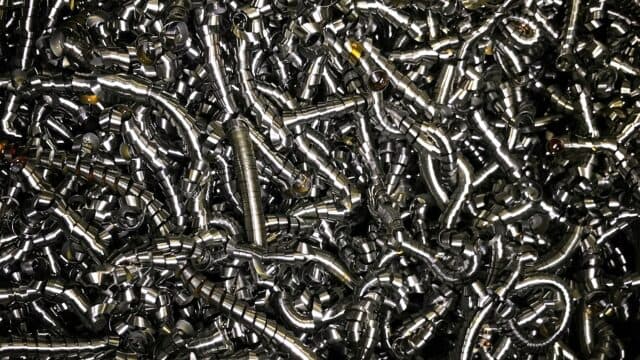
Stainless steel turnings
Recurring side stream from CNC machining
Min. lot · 100 kg
Keep Denmark's materials in use, one match at a time.
One company's residual material becomes the next company's supply. Scroll, and watch the loop turn.
What your residual materials are worth.
Drag the slider, pick a material. We show the avoided CO₂ and the value you can recover, both as a seller and as a buyer.
Illustrative ex-ante estimates based on Danish market price spreads and avoided-emission factors per material. CO₂ avoided is the handprint, the good you help others do. How we calculate this.
Explore the CO₂ dashboardFour steps from side stream to second source.
A combined marketplace and operating model. The platform organises the data; the team makes sure the exchange actually happens.
List
Add your recurring residual materials to the marketplace with price, volume, and terms.
Discover
Buyers find your material in the marketplace, and you can browse what other businesses have listed.
Trade
Confirm terms with verified counterparties and complete the exchange — with optional facilitation from us.
Track impact
Every completed exchange auto-credits CO₂ avoided, virgin material displaced, and cost saved to your dashboard.

Material from one business becomes input for another.
A second source for every material.
Every step on the marketplace closes a loop that would otherwise leak out as waste. Each completed exchange is quantified, attributed, and credited to your impact dashboard.
~ 280 kg
CO₂e avoided, avg.
~ 12 days
list → completed exchange.
The system isn’t keeping up.
A few grounded data points on where European and Danish material flows actually stand. Real numbers from public sources — and only those.
EU circular material use rate in 2024 — up only 0.1pp on 2023, and ~1pp in ten years.
Source·Eurostat / EEA, 2024Construction & demolition waste as share of total Danish waste.
Source·Danish circular economy dataBetter matching starts with better visibility into material flows.
Counting toward the UN Global Goals.
Every completed exchange moves three UN Sustainable Development Goals a little further. The figures below are ex-ante estimates of our contribution to date, directional and not audited.
Industry, innovation & infrastructure
Verified circular exchanges facilitated between Danish businesses.
Responsible consumption & production
Virgin material displaced, kept in use instead of newly extracted.
Climate action
Emissions avoided versus a virgin-material baseline (handprint).
Illustrative, to date. Estimated with explicit attribution and deadweight assumptions, not audited. See the methodology.
Common questions.
Short, honest answers about how Secondsource works at this stage.
Our initial focus is on harder, recurring material streams — wood, metal, plastic, construction leftovers, industrial side streams, and reusable surplus. If you produce a material recurringly and suspect it could have value to someone else, it is a candidate for listing.
No. Smaller manufacturers, workshops, and construction-related businesses often have some of the most consistent, well-defined material streams. Size matters less than recurrence and clarity of the material.
We do not operate transport ourselves. We help structure the exchange and coordinate handover. Logistics can be arranged by either party or through partners, depending on what works for the specific match.
Through a combination of classification, volume and recurrence, location, and the demand patterns we see across the network. Some streams match quickly; others need more structuring before a credible counterparty can be identified.
Yes — for now. We are starting in Denmark deliberately. The geography, business density, and regulatory context make it the right place to build a credible network before expanding.
We use a success-based model. Listing, structuring, and exploring matches are free. We charge a fee only when an exchange is completed and value is created.
Yes — we recommend it. One well-defined stream is enough to begin. It also tends to be the fastest way to test whether the model works for your operation.
It is a marketplace first. You list, browse, and trade residual materials with other verified Danish businesses. We layer optional facilitation on top — onboarding, classification, and exchange support — so the marketplace works even for streams that need structuring before they can be priced.
That is the most common starting point. The first step is identifying and structuring what you have. Whether or not a credible match exists is something we can assess together.
Start with the materials you already have.
List one material stream. We help structure it and look for relevant counterparties across the network. No upfront fee, we earn when an exchange creates value.